The device should stop being powered
The most important first step after liquid exposure is to stop feeding the reaction. Repeated power attempts and charging can turn localized contamination into corrosion, shorts, and damaged power rails. When the device reaches my bench, preserving the board and its data begins before any attempt to make it turn on.
Power changes everything
Liquid alone is only part of the problem. Voltage, contamination, and time accelerate corrosion and create conductive paths where none should exist.
Inspection before assumptions
A useful assessment considers the liquid, exposure time, power state, previous repair attempts, visible corrosion, and which circuits show abnormal behavior.
Data can change the priority
When the information on the device matters more than the device itself, the repair strategy should protect recoverability instead of chasing a quick power-on result.
Cleaning is diagnosis, not cosmetics
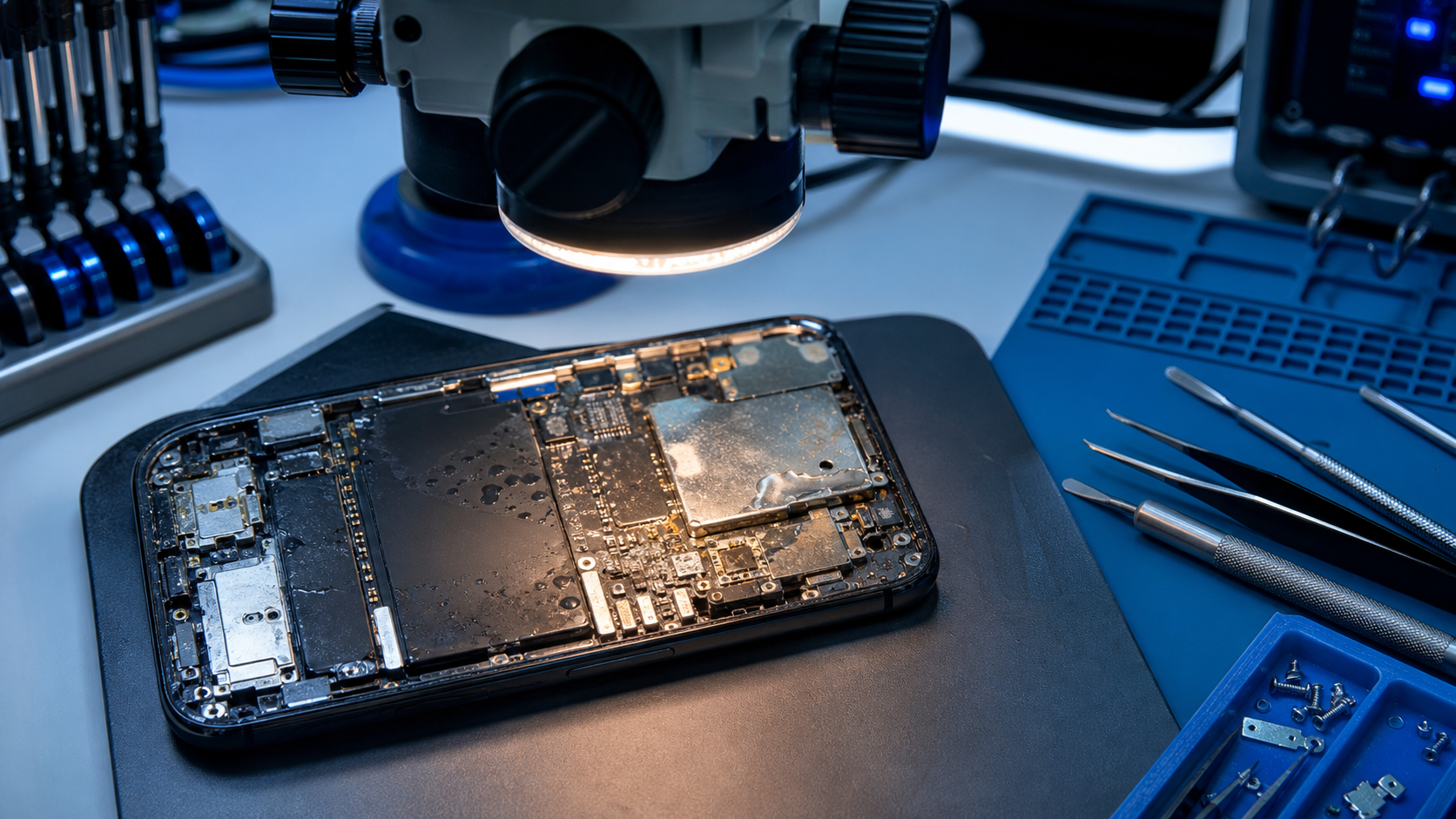
Under shields and connectors, corrosion can hide far from the first visible stain. Disassembly, magnified inspection, controlled cleaning, and electrical measurements reveal which areas are contaminated and which circuits have already changed. Only then does it make sense to choose between repair, data recovery, or stopping before more damage is introduced.
The first repair decision is really a preservation decision
Liquid damage does not follow a predictable boundary. Moisture can travel beneath shields, through connectors, and along tightly packed components before the outside of the device looks seriously affected. The type of liquid also matters because salts, sugars, and other contaminants continue reacting after the visible moisture is gone.
I begin by documenting the symptoms and the history: what entered the device, how long ago it happened, whether it was powered or charged afterward, and whether another repair attempt was made. With the battery disconnected, magnified inspection and electrical measurements help identify corrosion, shorts, abnormal rails, and components that should not be energized yet.
The repair strategy depends on the customer's priority. If the data is irreplaceable, the safest path may focus on making the board stable enough for recovery rather than restoring every feature immediately. Cleaning, replacing damaged components, and rebuilding traces happen only after the evidence supports them. Sometimes the responsible decision is also to stop before additional work reduces the chance of recovery.