
La falla se presenta como ausencia de señal
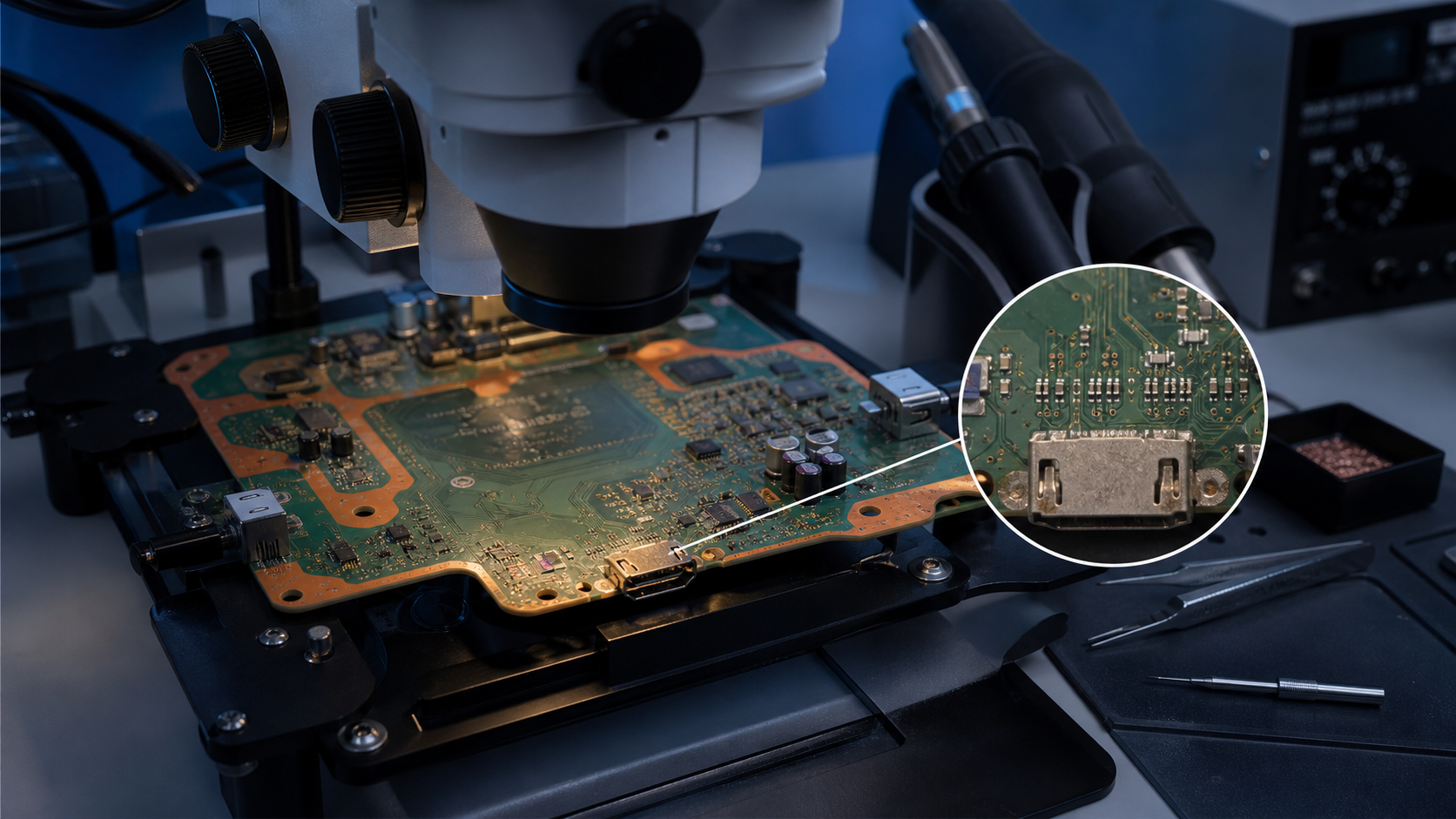
Una PS5 puede llegar al banco con un puerto HDMI visiblemente dañado, imagen intermitente o sin video. Comienzo escuchando lo ocurrido, revisando mecánicamente el conector e inspeccionando el área cercana con aumento antes de aplicar calor o soldadura a la placa.
El puerto es solo el comienzo
El daño físico puede afectar soldaduras, pads, pistas, filtros y componentes cercanos. Reemplazar el conector sin inspeccionar toda la ruta puede dejar la falla original sin resolver.
Una reparación limpia necesita evidencia
La inspección visual, las pruebas de continuidad, las mediciones en modo diodo, el conocimiento de la ruta de señal y las pruebas controladas generan confianza antes de devolver la consola.
La verificación importa
La prueba final debe cubrir una salida de video estable, el comportamiento del cable, el ajuste del puerto, el comportamiento térmico y las condiciones que causaron la falla original.
La reparación no termina cuando el puerto queda nivelado
Un conector puede verse perfecto mientras una almohadilla arrancada, una pista dañada, un filtro o un componente posterior de la señal todavía impide el video. Después de instalarlo verifico continuidad y lecturas de diodo, inspecciono cada pin y anclaje, limpio el área, rearmo con cuidado y compruebo una salida estable con cables y pantallas en buen estado.
Una reparación completa sigue toda la ruta de la señal
El conector es el punto que recibe la fuerza física, pero el síntoma puede involucrar más que el conector. Con aumento busco movimiento, uniones agrietadas, almohadillas faltantes, pistas alteradas, filtros dañados, contaminación e intentos de reparación anteriores. Esas observaciones determinan si el reemplazo es apropiado o si el diagnóstico debe continuar más adentro del circuito HDMI.
Retirar el puerto dañado requiere calor controlado, protección para los componentes cercanos y paciencia con la masa térmica de la placa. Después de preparar las almohadillas, el reemplazo debe quedar mecánicamente alineado, con cada pin de señal unido correctamente y cada anclaje lo bastante fuerte para soportar el uso normal del cable. Un resultado visualmente limpio facilita la inspección, pero la apariencia por sí sola no demuestra continuidad eléctrica.
La verificación cierra la reparación. Comparo mediciones entre las líneas de señal, vuelvo a inspeccionar el área, confirmo que el puerto sujete correctamente el cable y pruebo video estable con equipos conocidos. La consola debe soportar reinicios, movimiento del cable, cambios de resolución y temperatura normal de funcionamiento. Mostrar imagen una vez no es el objetivo. Restaurar una ruta de señal confiable sí lo es.