La construcción comenzó con límites claros
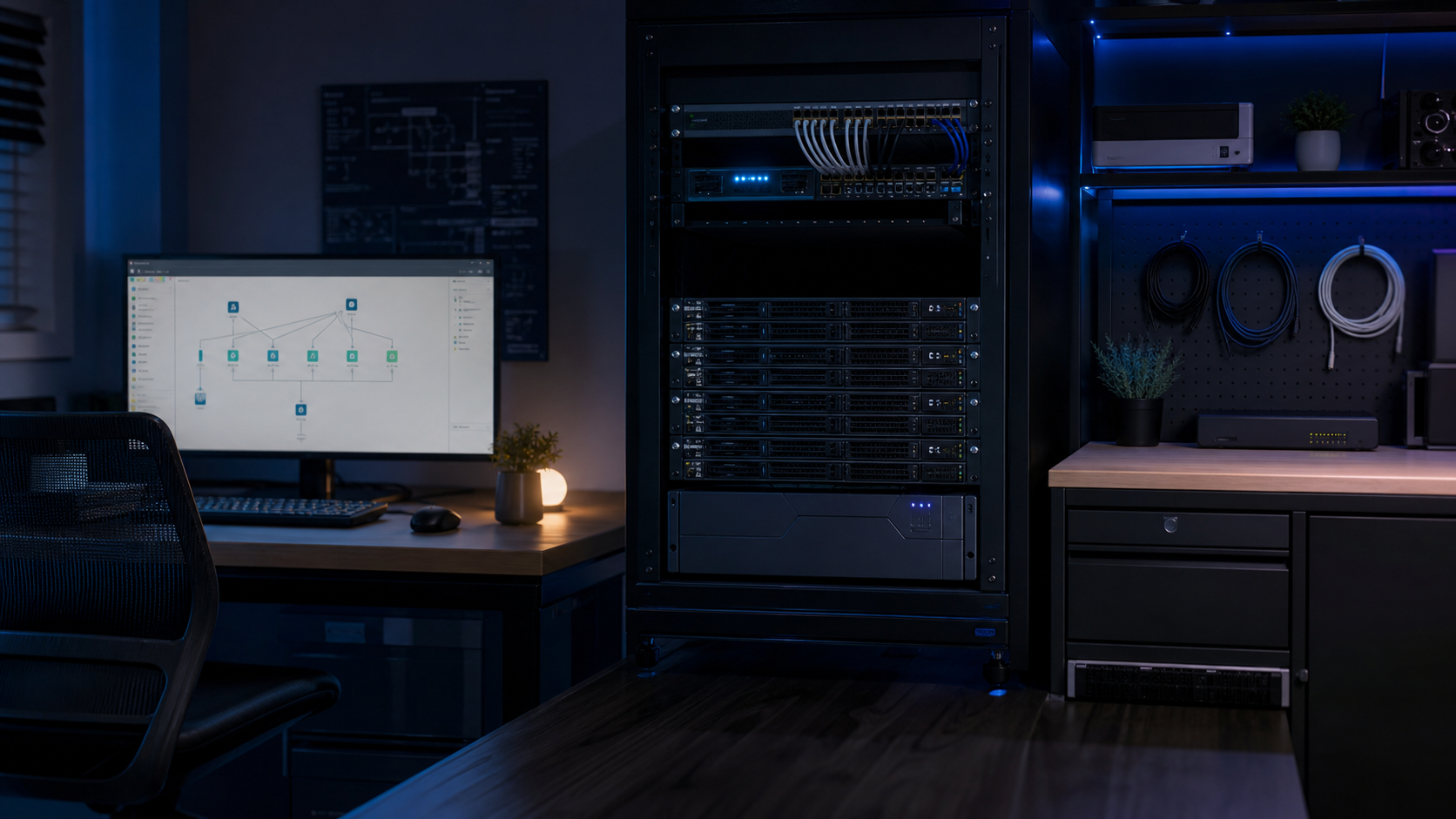
Mi laboratorio doméstico creció alrededor de una necesidad sencilla: crear un lugar donde pudiera cambiar redes, interrumpir servicios, reconstruir servidores y estudiar el resultado sin poner en riesgo los sistemas de uso diario. Proxmox proporcionó la capa de cómputo, mientras pfSense, las VLAN, Pi-hole, Windows Server y el monitoreo se convirtieron en partes separadas de un entorno que podía comprender de extremo a extremo.
Un laboratorio necesita una idea organizadora
Es fácil añadir otra máquina u otro servicio. Lo difícil es conservar una respuesta clara a tres preguntas: para qué sirve, de qué depende y cómo lo recupero.
Separar las capas
El cómputo, almacenamiento, red, identidad, monitoreo y las aplicaciones deben entenderse como capas separadas aunque compartan hardware. Esa separación facilita comprender los cambios y las fallas.
La documentación es infraestructura
Los diagramas, planes de direccionamiento, responsables de servicios, intención del firewall y notas de recuperación no son trabajo de limpieza. Son parte del sistema y deben evolucionar con él.
El crecimiento ahora tiene una regla
Un nodo o servicio nuevo se gana su lugar solamente cuando están claros su propósito, dependencias, zona de red, monitoreo, respaldo y ruta de recuperación. Esa regla mantiene rápida la experimentación sin permitir que el laboratorio se convierta en una pila de sistemas que solo funcionan porque nadie los ha tocado recientemente.
Cómo se ve el laboratorio como un sistema vivo
El laboratorio no es una instalación terminada. Es un entorno controlado que cambia a medida que aprendo. Los clústeres de Proxmox ofrecen espacio para máquinas virtuales y contenedores, pfSense controla el tráfico entre zonas, Pi-hole hace visible el comportamiento DNS y Grafana con Prometheus muestra lo que hace la infraestructura a lo largo del tiempo.
Algunos proyectos son temporales por diseño. Puedo crear un servidor para probar un flujo de identidad, un exportador de monitoreo o un nuevo patrón de automatización y eliminarlo cuando la lección queda documentada. Otros servicios se vuelven permanentes porque sostienen el resto del entorno. Saber a qué categoría pertenece un sistema determina cuánta redundancia, respaldo, supervisión y documentación merece.
La lección más amplia es que el crecimiento no es principalmente un problema de hardware, sino de claridad. Un laboratorio pequeño con dependencias comprensibles es más útil que uno grande que no se puede recuperar con confianza. Cada reconstrucción me da otra oportunidad de hacer que el diseño, los nombres, los límites de seguridad y el proceso de recuperación sean más fáciles de explicar a la siguiente persona, incluido mi yo del futuro.